roboquant avatar

Resources

Developing algo-trading skills is a major endeavor. This page lists some of the resources that can help with that. The resources listed are not limited to roboquant and can be beneficial to any algo-trading development.

Books

There are more books than ever that cover the topic of algo-trading. The quality varies a lot, from books that are really present value to books that are just a cut&paste of some public internet articles. The books covered in these reviews all fall in the first category, they all present value in some way.

When looking for books to learn more about (algo-)trading, I recommended looking for books that focus on the foundation. So books that explain how to develop and test a strategy, what are good metrics to monitor and what are possible pitfalls. Or books that go into more details about the mathematical side of algo-trading. Books that promise to provide you with strategies that make a lot of profit should be best avoided (IMHO).

machinelearning

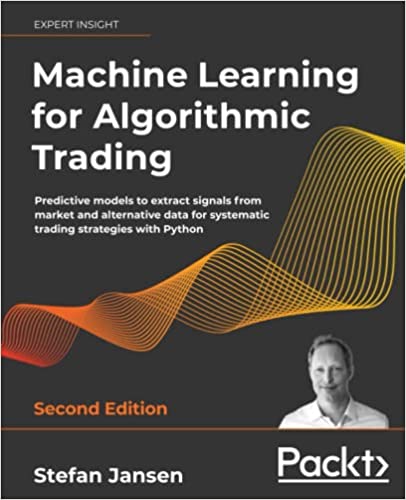
Machine Learning for Algorithmic Trading - Stefan Jansen

Level: ★★

This book explains how different machine learning techniques can be applied to algo-trading. It doesn’t focus on a single technique like deep learning, but touches many different techniques instead. For example, it has some good content on Bayesian machine learning.

Because of all the different techniques described, this book is over 800 pages long. If you want to start using machine learning in your strategies, this book is a must-have in my honest opinion.

One thing to keep in mind is that because machine learning is progressing so fast, some libraries and examples mentioned are outdated. Also, you won’t find the latest state-of-the-art deep-learning architectures in here.
advances

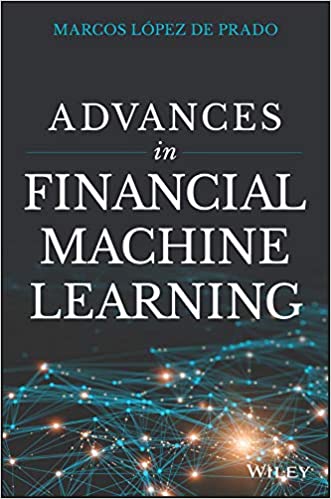
Advances in Financial Machine Learning - Marcos Lopez de Prado

Level: ★★

This book has several innovative and fresh ideas about approaches to algo-trading. And although the title has "Machine Learning" in it, much of the content also applies to more traditional strategies. For example, there are several chapters dedicated to back-testing that are relevant for almost any type of strategy.

The included code snippets are written in Python, but the underlying software algorithms are applicable to any implementation. Also, this book contains great information about how easy it is for your approach to developing look-ahead bias without realizing it.

Marcos Lopez de Prado also has some good YouTube videos where he explains much of the same theory. So check those out first if you are not sure yet about buying this book. Also, the book felt a bit fragmented at times, and the videos help to make the topics covered in the book more coherent.

trading

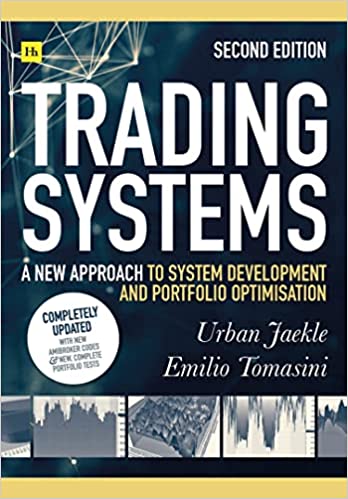
Trading Systems - Emilio Tomasini

Level: ★

A good book for a beginner that has plenty of pragmatic tips on how to build, test, optimize and implement robustness trading systems. There is some AmiBroker code included, but even without understanding this, you can still follow along.

After explaining the basic theory behind developing algo-trading strategies, the book includes a step-by-step example. There are also many colorful charts included, so be aware if you order the e-book version and want to view it on a gray-scale e-reader.

Lastly, if you are new to statistics, this book also has a good introduction on how to deal with forecasts in the context of uncertainty.

automated

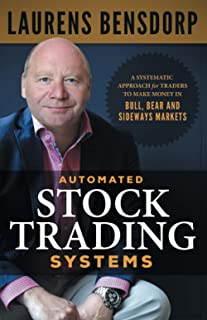
Automated Stock Trading Systems - Laurens Bensdorp

Level: ★

Easy to understand and follow with extra attention on how to diversify your portfolio using different strategies. The book also describes 7 concrete strategies and the rules that need to be implemented for each of these strategies. The strategies are easy to understand and are a mix of trend-following and mean-reversion strategies. The book doesn’t contain any code snippets.

Not sure about the merits of the strategies described in this book, since the evaluation criteria included are too simplistic in my opinion. But I would argue implementing some strategies yourself from scratch is a great learning experience.

Like many other "Amazon printed" books, the images are not great. But in this case, fortunately, they are not that important to understand the content.

systematic

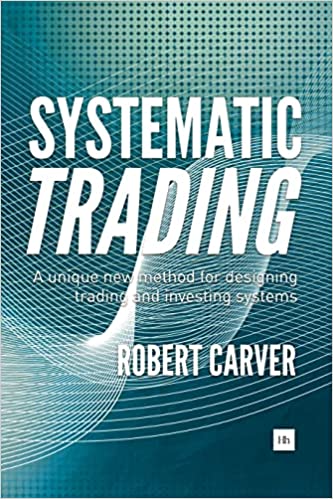
Systematic Trading - Robert Carver

Level: ★★

Robert Carver is a regular guest at the podcast Top Traders Unplugged and has written several good books, of which this is one.

He develops his own algo-trading software (available under open-source) and that shows. There are enough details in the book to actual implement the strategies in your own code. If anything, due to the high density of information, some chapters require multiple reads before grasping everything.

algorithmic

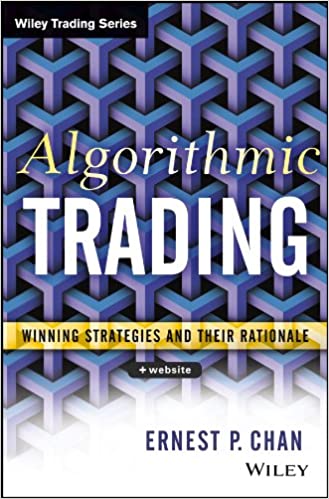
Algorithmic Trading - Ernest P. Chan

Level: ★★

This book does not try to sell you trading strategies, but teaches you the methods and underlying discipline to achieve good strategies.

The code snippets included are written in MATLAB. But don’t let that put you off, they are easy to understand, especially if you have some background in math or another computer language. The chapters are divided between mean-reversion and momentum strategies, and the last chapter has useful tips on how to approach risk management.

This book is more theoretical than some other intermediate books on this list. But that is also a major bonus; it means it will stay relevant longer, and not be outdated as quick as books that focus more on programming using third-party libraries.

econometrics

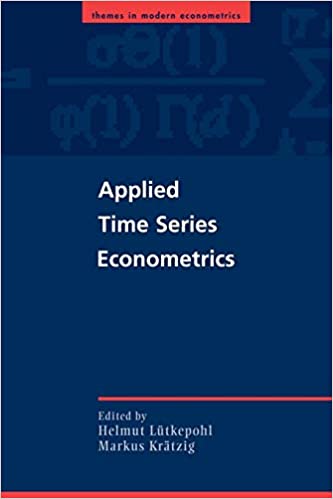
Applied Time Series Econometrics - Helmut Lütkepohl

Level: ★★★

This book provides a great foundation for understanding much of the theory behind time series analysis. It clearly explains commonly used models and important concepts like stationary and non-stationary processes. It requires good knowledge of math at least at an undergraduate level.

The examples used in this book cover both macro-economical and investment oriented use-cases. So this is, in particular, a great book if you want to strengthen your overall knowledge of (non-stationary) timeseries.

Besides the content, there is also an accompanying Java project hosted at http://jmulti.de that implements various models described in the book, like an ARIMA model. This Java project is a bit outdated since the code-base pre-dates 2010, but nonetheless a nice bonus.

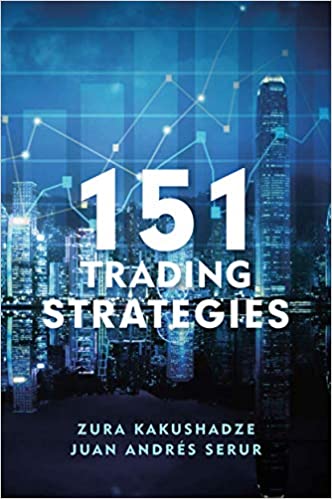
151tradingstrategies

151 Trading Strategies - Zura Kakushadze and Juan Andrés Serur

Level: ★★

This book provides an overview of many strategies, divided by asset class. So there are strategies for options, stocks, bonds, etc. Each strategy is described shortly, using simple mathematical formulas and often a reference to the original publication. If you have only been exposed to a limited set of strategies, this will help to broaden your horizon and get new ideas.

Although the formulas are concise, essential information is sometimes missing to be able to transfer these strategies into code. For example, the description of a mean-reversion strategy doesn’t explain how to find correlated assets, just how to generate a signal given that they are correlated.

Some chapters, like real estate strategies, have so little own content that they could have better left out, in my opinion. At best, these chapters are useful as a reference to other publications, but I’m not sure that justifies putting them in this book.

Also, note there is no analysis included about the performance of the strategies. So expect to do a fair amount of research before the described strategies are ready for a back test.

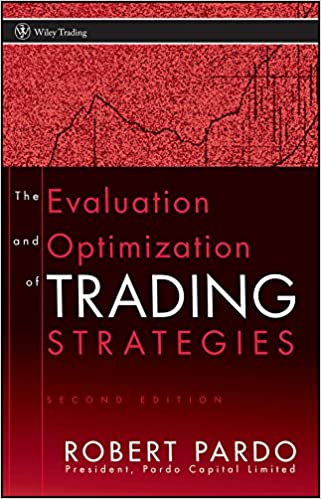
evaltrading

The Evaluation and Optimization of Trading Strategies - Robert Pardo

Level: ★

If you are new to algo-trading and need insights on how to develop a trading strategy and test and optimize it, this is the book for you. It covers most topics important to algo-traders, and the content is easy to grasp and explained in plain English with many examples. The author is also the creator of the walk-forward analysis.

Even if you don’t have a background in software development or math, you can easily follow along. And although the book is more than 15 years old, most of it is still applicable today. Of course, the downside of not using code or math to explain the concepts, is that it is a bit less concise. But that is to be expected.

If there is one small complaint, there are a lot of white spaces, and the tables and charts don’t add that much. So this 360+ page book could have easily been condensed to 200 pages.

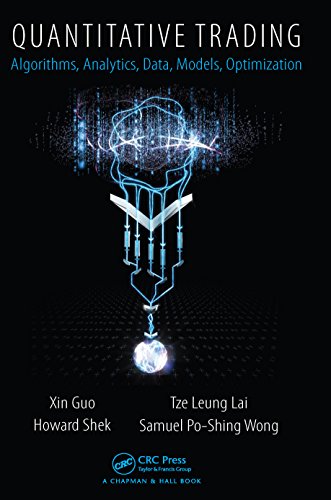
quantatativetrading

Quantitative Trading - Xin Guo and others

Level: ★★★

This book combines academic research with industry trends. It covers a wide range of topics, from statistical trading models to optimizing order execution and risk management. Sometimes it feels a bit like each author focused on their own area of expertise, leading to somewhat disjointed chapters. Still, the content is unique and the authors are clearly experts.

Because of the wide range of topics, some chapters lack the details to directly apply them to your own strategies. So it serves better as a source of inspiration, rather than a pragmatic approach to algo trading. Please note you’ll need a firm grasp on math to get the most out of this book.

Some content is more catered towards trading firms than retail traders. For example, optimizing trade execution is most applicable when you place large orders that would otherwise suffer from a lot of slippages.

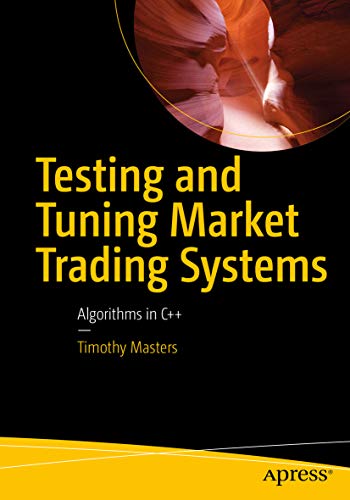
testing tuning

Testing and Tuning Market Trading Systems - Timothy Masters

Level: ★★

The main topics covered in this book are algo-strategy optimization and testing. Besides a deep dive into these topics, there is also a lot of attention to establishing the statistical characteristics of the results with topics like confidence intervals. These are important topics that are often missing in other (simpler) books.

The typical layout per chapter is first a textual description of the steps and then the corresponding C++ code. The code used is very basic, so you can almost directly translate it into another language like Kotlin. So for sure, you don’t need to be a C++ guru to understand the code snippets.

Much of the back testing theory is overlapping with books like Advances in Financial Machine Learning by Marcos Lopez de Prado. What is different is that this book also contains some results of applying the theory to real data. This makes it more pragmatic and tangible, even if, of course, the results are outdated.

The page layout of the book is not great. The code snippets are not standing out, and the font used for code is large. Also, this book doesn’t use a right-aligned text layout. This all together makes pages often look very busy. But the content makes up for it.

statistically sound

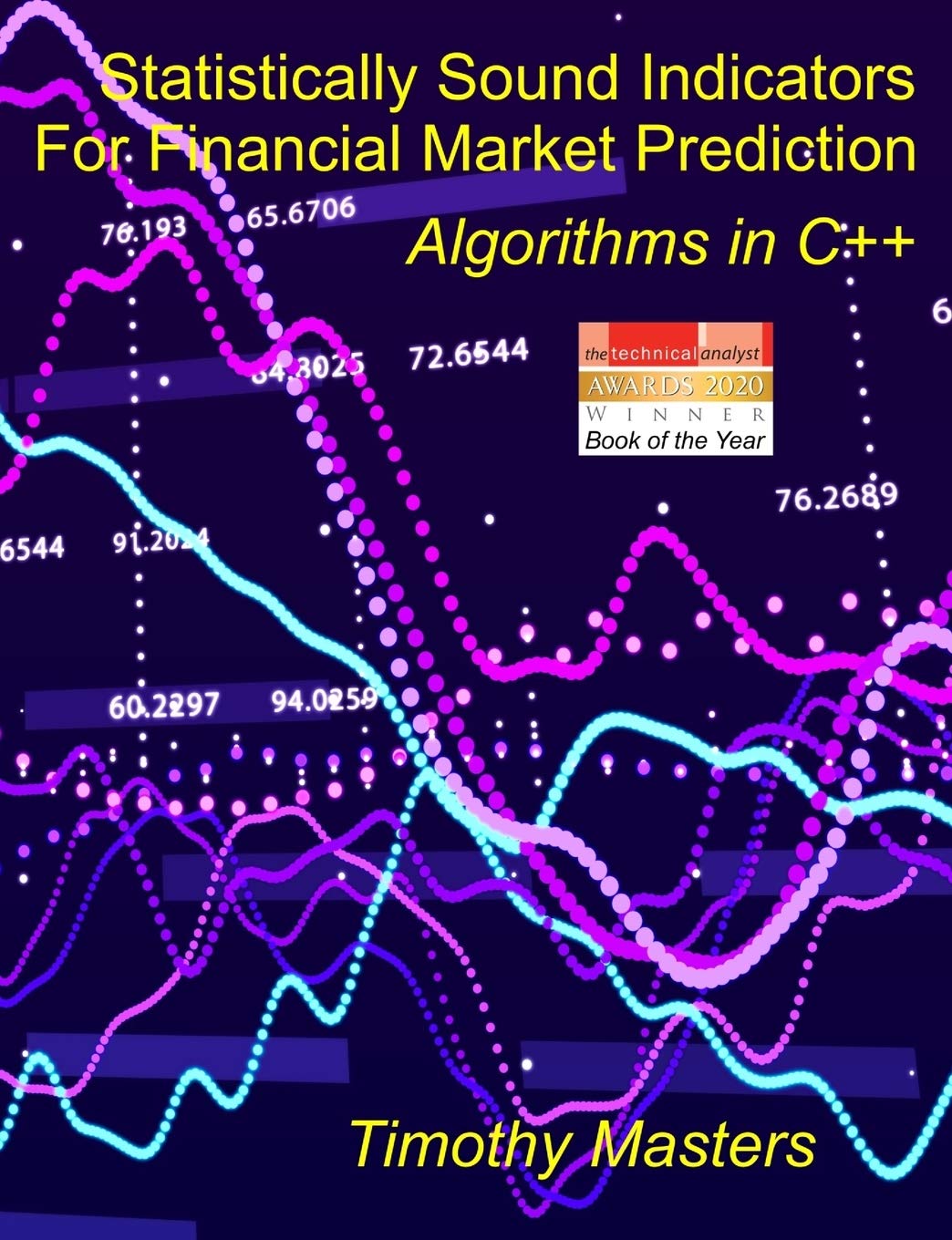
Statistically Sound Indicators For Financial Market Predictions - Timothy Masters

Level: ★★

This is perhaps the exception to the rule to not buy books that promise profitable strategies or indicators. The approach taken in this book is indeed very sound, just like the title promises. And even if some of the proposed indicators are not profitable any more, you can learn a lot from the approach taken.

The indicators are grouped by type. For example, you have chapters dedicated to volume-based indicators and multi-market indicators. Next to the indicator chapters, there is also an excellent chapter on the stationarity of time series.

Just like the other book of Timothy Masters that is reviewed above, the C++ code in this book is not difficult to understand and can be easily translated into other computer languages.

Podcasts

This section provides an overview of some popular podcasts about (algo-)trading. The provided links are pointing to Apple Podcast shows, but typically the same podcasts can also be found on most other podcasting platforms.

better system trader

One of my favourite podcasts about systematic trading. Every episode has a different trader as guest. The focus is on pragmatic topics that can be put directly to work in your own strategies.

Since there is often accompanying visual content, you might want to watch the episodes on their YouTube channel instead.

chat with traders

This podcast contains several episodes and interviews with professional algo traders. Especially the coverage of potential pitfalls of going live with fully automated trading systems might prove to be extra helpful and insightful.

Here you can find which episodes contain algo-trading topics.

top traders unplugged

All about rule-based investment in the context of trend following strategies. There are some very experienced traders on this show, and they share a lot of useful tips and best practices.

The episodes with Rob Carver as guest are particularly interesting since he is a retail algo-trader himself (but not yet using roboquant ;). An additional benefit for algo-traders is that most trend following strategies are not that difficult to translate into executable code.

One thing to keep in mind is that most presenters come from a CTA (Commodity Trading Advisor) background, and as a result many of the covered assets are commodities and futures, and not individual stocks.

patrick boyle

Provides good background information on trending financial topics. Besides providing excellent insights into these hot topics, I really enjoy the way it is presented with a good amount of dry English humor.

flirting with models

Explore systematic investment strategies, ranging from value to momentum and merger arbitrage to managed futures. The nice thing about this podcast is that there are many types of guests interviewed, ranging from traditional fund managers to retail crypto traders.

roots report

Discusses recent developments in the financial market on a weekly basis. If you don’t have the time to stay up to date with the latest financial news, this is an easy way to catch-up.

quant engineering

Discusses the latest trends in data analytics, asset management, blockchain and risk management. If you are interested in the application of machine learning, definitely listen to this podcast.

confessions

Shares educational trading experience, coupled with some entertaining stories. Not that much focus on trading automation, but good content on trading in different asset classes with knowledgeable guests.

Market Data

The following table provides an overview of popular (market) data providers. The list includes free as well as paid providers. Since subscription fees change all the time, these are not included. Several of the data providers have out-of-the-box support in roboquant.

Provider Asset Types API Historic Realtime Delayed[1] Realtime Pricing model Remarks

Polygon

US stocks, options, currencies and indices

Monthly Fee

Unlimited API calls

Alpha Vantage

Stocks, fundamental, forex, crypto and economic indicators

API calls per minute

Covers also exchanges outside US

Stooq

US stocks, UK stocks, world stocks, macroeconomic indicators

Free

The website is in Polish

Intrinio

US stocks, options, Fundamentals

Annual Fee

Realtime feeds don’t have additional limits

Alpaca

US stocks, crypto

Monthly Fee

Subscription prices have fluctuated a lot in recent years

Tiingo

US/China Stocks, ETF, crypto

Monthly Fee (economical)

50+ year of end-of-day data and IEX realtime data with only 15ms delay.

Databento

US Stocks, FX, futures and options

Fee per GB

L3 level data, proprietary protocol for live data

Dukascopy

Forex, Commodities, CFD

Free (after creating an account)

They also provide a Java client called JForex

Norgate Data

Stocks, Futures and Forex

6- or 12-monthly fee

Norgate uses a local database to store the data, Windows only.

Binance

Crypto

Free

Market data only from own exchange

IEX Exchange

IEX traded US stocks L3

Free

Large daily files that require additional processing

IEX Cloud

Market data, fundamental, economic

Bundles + plans

Streaming data requires an additional plan

Financial Modeling Prep

Market data, fundamental, news, economic, insider

Monthly fee

U.S., Xetra, Euronext, TSX, SEDAR, SEHK

Kaggle

Various datasets

Free

Some datasets have major quality issues

MetaTrader5

Forex, futures, stocks

Depends on the used Broker

You’ll need to install an app to get most functionality


1. Typically, 15-minute delay due to distribution restrictions imposed by US exchanges